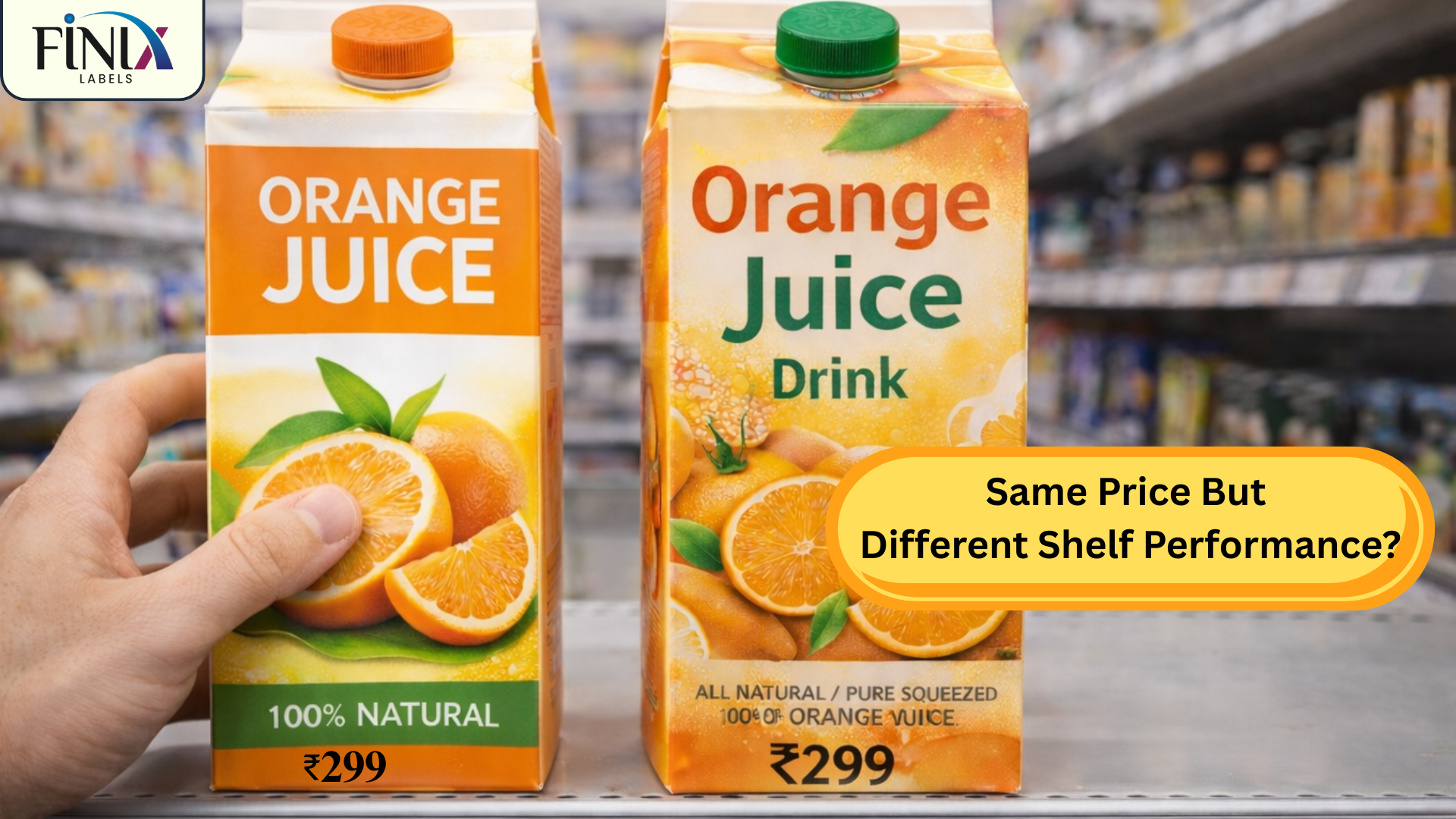
Why Two Products with the Same Price Perform Differently on the Shelf
It is common to see two similar products placed next to each other on a store shelf with the same price. One sells quickly, while the other moves slowly. This difference often confuses business owners. When price and product category are the same, the reason for the performance difference usually lies in how the product looks and communicates at first glance.
On a crowded shelf, customers decide within seconds. That decision is influenced by small but powerful factors.
First Impression Matters
Before a customer reads details, the product must catch attention. Colour contrast, clarity, and neat presentation play a major role. A product that looks clean, well-aligned, and easy to understand feels more trustworthy. Another product, even if similar in quality, may look cluttered or confusing and get ignored.
The shelf is competitive. Products that stand out visually get picked up first.
Label Clarity and Readability
Customers quickly scan labels for key information such as product name, flavour, usage, and expiry. If the label text is too small, poorly aligned, or crowded, customers hesitate. Clear fonts, proper spacing, and logical information placement make a product easier to understand.
When customers do not have to struggle to read a label, they feel more confident choosing it.
Perceived Quality
Packaging and labels strongly influence how customers judge quality. A well-finished label with good print clarity and proper material gives a premium feel, even at the same price. A label that looks dull, uneven, or poorly finished creates doubt.
Customers often associate better-looking packaging with better product quality, even without real comparison.
Brand Consistency
Products that maintain consistent label design across batches build familiarity. When customers recognise a brand instantly, they feel comfortable buying it again. Inconsistent colours, changing layouts, or visible quality variation can weaken trust.
Consistency creates comfort. Comfort drives repeat purchases.
Ease of Decision
A good shelf performer makes the buying decision easy. The customer understands what the product is, who it is for, and why it suits their need. When labels communicate clearly and quickly, customers move faster from looking to buying.
Confusion slows decisions. Clarity speeds them up.
Conclusion
Two products with the same price can perform very differently because customers do not buy based on price alone. They respond to what they see, understand, and trust within a few seconds. Label clarity, visual appeal, consistency, and perceived quality all influence shelf performance.
At Finix Labels, this understanding shapes how labels are designed and produced, with a focus on clarity, consistency, and real shelf performance. In retail, small details make a big difference, and the product that communicates better often wins, even when everything else looks equal.