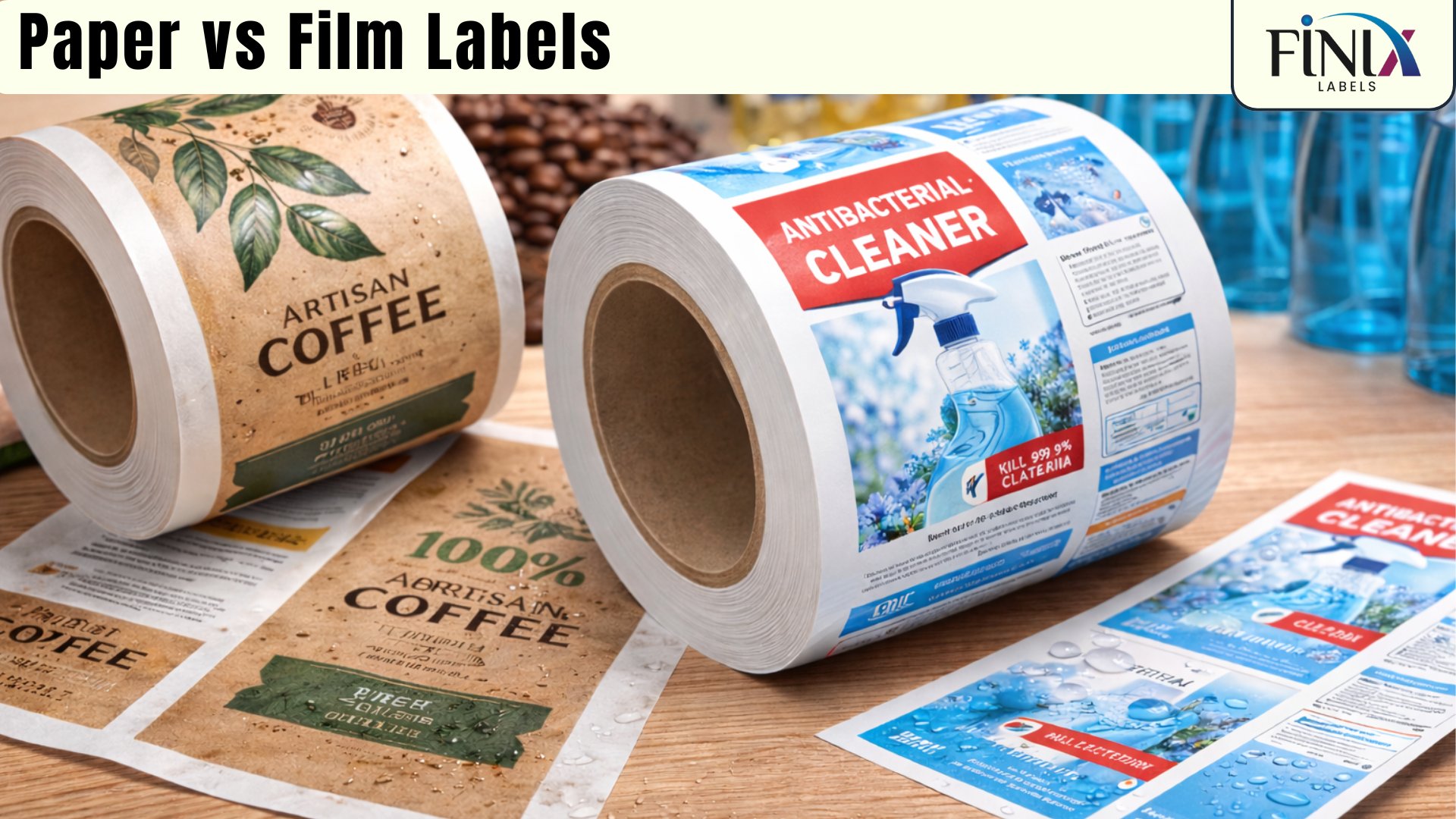
Paper vs Film Labels & How to Choose the Right One
Choosing the right label material is an important decision for any product-based business. Many customers face confusion when selecting between paper labels and film labels. Both options look similar at first glance, but their performance differs based on usage conditions. The right choice depends on how the product is stored, handled, and displayed. Understanding the difference helps avoid label damage, rework, and customer complaints.
Paper labels are commonly used for dry and short-term applications. They are cost-effective and suitable for products stored in controlled environments. Paper labels work well for cartons, boxes, stationery items, and products with limited exposure to moisture or friction. They offer good print quality and are easy to apply. However, paper labels absorb moisture and are prone to tearing. In humid conditions or cold storage, paper labels may wrinkle, peel, or fade faster.
Film labels are made from materials such as polypropylene or polyester. These labels are designed for durability. They resist moisture, oil, heat, and handling damage. Film labels are commonly used for food products, beverages, personal care items, pharmaceuticals, and chemicals. They maintain appearance even in refrigeration or outdoor conditions. Film labels are flexible and perform well on curved surfaces without cracking.
The environment plays a major role in material selection. If the product is exposed to water, humidity, or frequent handling, film labels are a better choice. If the product remains indoors with minimal handling, paper labels can be sufficient. Shelf life expectations also matter. Products with longer shelf life need labels that stay readable and intact over time.
Application method is another factor.High-speed packing lines and automated labelling machines perform better with consistent and durable materials. Film labels often run more smoothly on machines due to their strength and flexibility. Paper labels may require careful handling to avoid tearing during application.
Cost should be considered, but it should not be the only factor. While paper labels are cheaper initially, damage and replacement costs can increase overall expenses. Choosing the wrong material may result in product returns or re-labelling.
Conclusion
There is no single label material that suits all products. Paper labels and film labels serve different purposes. The right choice depends on product type, storage conditions, handling, shelf life, and application method. Selecting the correct label material ensures better performance, reduced wastage, and a consistent brand appearance.
At Finix Labels, customers are guided through material selection based on real usage conditions. By understanding how and where the label will be used, Finix Labels helps businesses choose between paper and film labels with confidence. Because the right label material protects not only the product, but also the brand behind it.
For enquiries and barcode labels, mail us at info@finixlabels.com
Call: +91 98464 31143