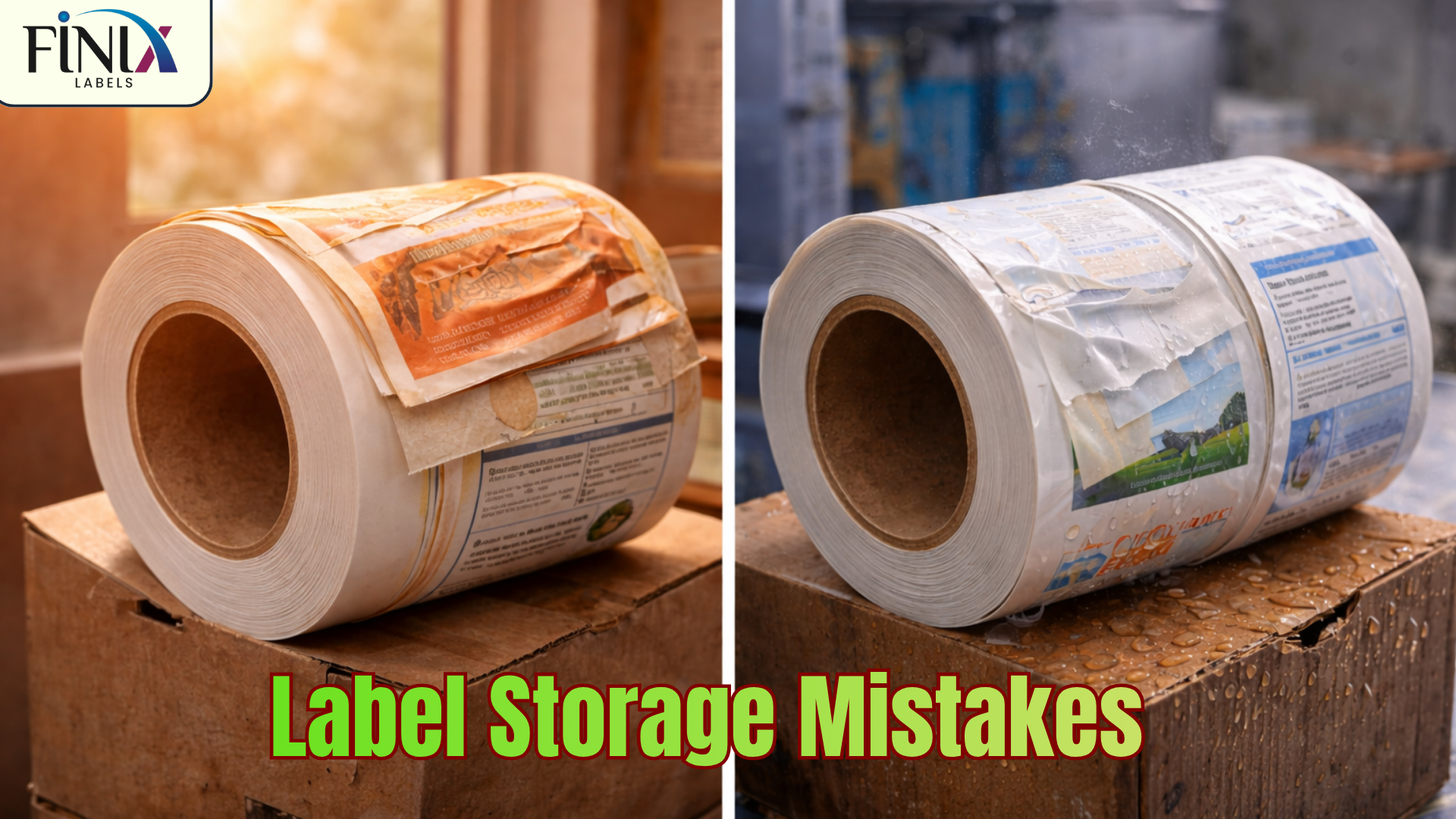
Common Label Storage Mistakes That Reduce Performance
Labels are often stored after printing and used later during production or packing. Many businesses assume that once labels are printed correctly, they will perform well whenever they are used. In reality, improper storage can damage labels even before they reach the machine or product. Storage conditions directly affect adhesive strength, print clarity, and material behaviour. Understanding common label storage mistakes helps prevent performance issues and avoid unnecessary losses.
One of the most common mistakes is storing labels in areas with high heat or direct sunlight. Excess heat dries out adhesive and weakens bonding strength. Labels stored near windows, machines, or rooftops may lose their sticking ability, leading to peeling during application.
Humidity is another major issue. Labels stored in damp rooms or near water sources absorb moisture. This causes paper labels to wrinkle and film labels to curl. Moisture also affects adhesive consistency, resulting in uneven application or lifting edges.
Improper stacking of label rolls also creates problems. When rolls are stacked horizontally or overloaded, pressure damages edges and causes deformation. This affects smooth feeding during machine application and increases label wastage.
Many businesses remove labels from original packaging too early. Labels are packed in protective wrapping to control dust, moisture, and temperature exposure. Removing this protection before use exposes labels to environmental damage.
Dust and dirt accumulation is another overlooked issue. Labels stored openly collect dust, which sticks to adhesive surfaces. This reduces bonding strength and causes labels to lift or fall off after application.
Temperature shock is another mistake. Moving labels directly from a cold storage area to a warm production floor causes condensation. Moisture forms on the label surface, affecting both print and adhesive performance. Labels should be allowed to adjust gradually to room temperature before use.
Poor stock rotation also reduces label performance. Using older labels after long storage increases the risk of adhesive degradation. Without proper batch tracking, expired or aged labels may enter production unknowingly.
Conclusion
Label performance depends not only on printing quality, but also on how labels are stored before use. Heat, humidity, pressure, dust, and poor handling slowly reduce label effectiveness. Many label-related production issues begin in the storage room, not on the machine.
At Finix Labels, customers are guided not only on label selection but also on correct storage practices. By following proper storage guidelines and handling labels carefully, businesses can maintain label performance, reduce wastage, and ensure smooth production. Because a well-made label delivers results only when it is stored the right way.
For enquiries and barcode labels, mail us at info@finixlabels.com
Call: +91 98464 31143