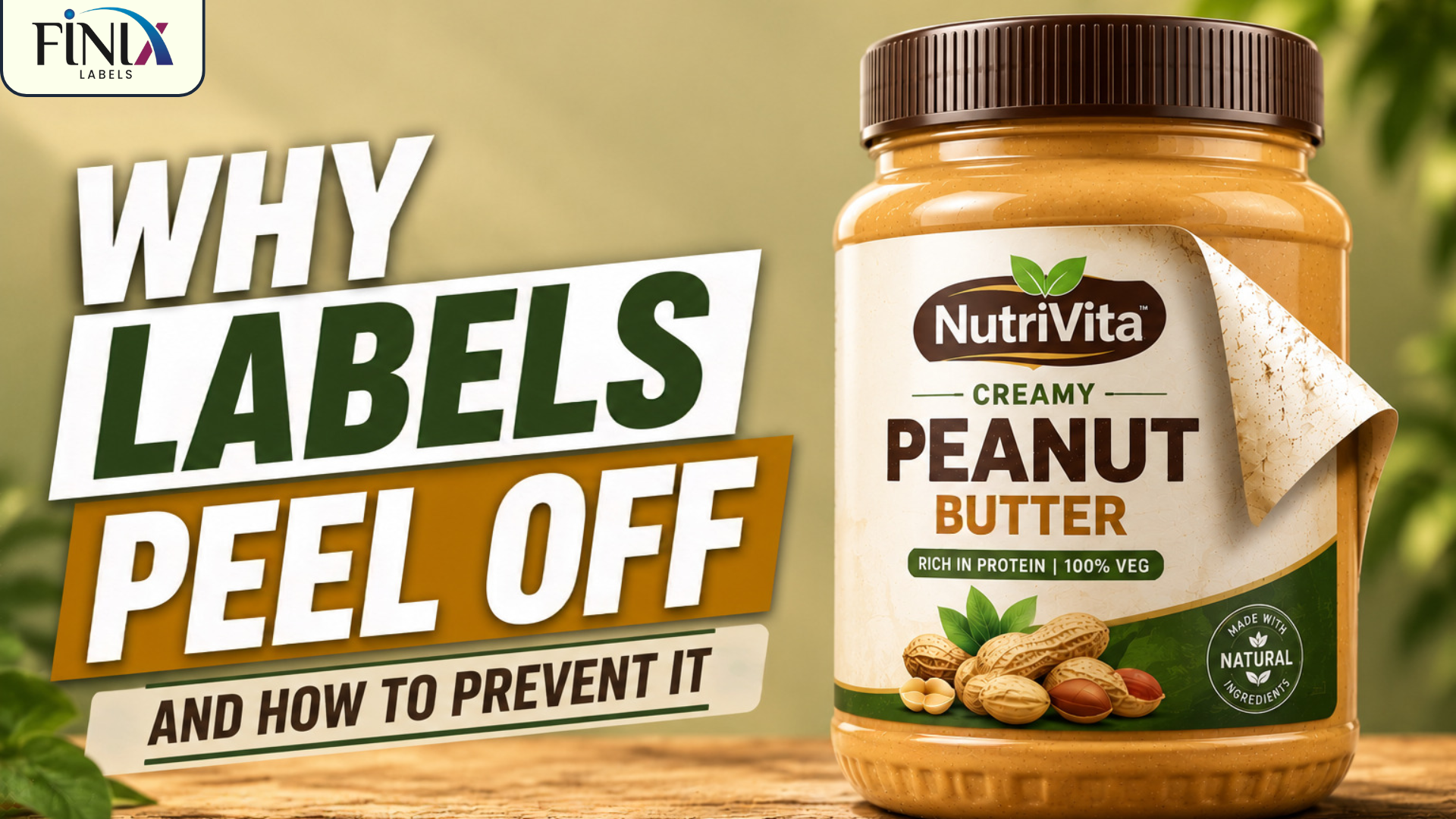
Why Labels Peel Off and How to Prevent It
A product label is not just a sticker. It helps customers identify your brand, provides important product information, and displays barcodes and other details clearly. When a label starts peeling, lifting, or wrinkling, it can make the product look unprofessional and reduce customer trust. Choosing the right self-adhesive labels and applying them correctly helps avoid these problems and keeps your packaging looking its best.
Common Reasons Labels Peel Off
There are several reasons why a product label may peel off. One of the most common is using the wrong adhesive. Different packaging materials such as plastic, glass, metal, and paperboard need different types of adhesives. A label that sticks well to one surface may not perform the same on another.
Another common reason is a dirty surface. Dust, oil, grease, or moisture on the container can stop the adhesive from sticking properly. Even high-quality barcode labels or custom product labels may peel if they are applied to an unclean surface.
Incorrect label application can also cause problems. Air bubbles, uneven pressure, or poor alignment can stop the label from sticking evenly, causing the edges to lift over time.
Consider the Product Environment
The place where a product is stored or used also affects label performance. Products kept in refrigerators, freezers, or humid areas need adhesives that can handle moisture and low temperatures. Products exposed to heat, sunlight, or regular handling need durable label materials that stay in place under these conditions.
Choosing labels based on the product’s environment helps maintain a clean appearance and strong adhesion throughout its use.
Choose the Right Label Material
Selecting the right label material is just as important as choosing the right adhesive. BOPP labels are a popular choice for products exposed to moisture, oil, or frequent handling because they are durable and tear-resistant. Paper labels work well for many dry indoor products, while specialised materials are available for applications with specific packaging needs.
Using the right material helps prevent peeling, wrinkles, and early label damage while improving the overall look of the product.
Ensure Proper Label Application
Even high-quality self-adhesive labels can fail if they are not applied correctly. Labels should always be applied to clean, dry surfaces using even pressure. Businesses using automatic labelling machines should regularly check machine settings and alignment to ensure labels are applied accurately.
It is also a good idea to test labels on actual product containers before starting full production. This helps identify any issues early and reduces unnecessary material waste.
Work with an Experienced Label Manufacturer
Choosing the right label involves selecting the right material, adhesive, and printing method for your product. An experienced label manufacturer can recommend the best solution based on your packaging, storage conditions, and application process. Expert guidance helps improve label performance, reduces production issues, and ensures your products maintain a professional appearance from manufacturing to the customer.
Final Thoughts
Labels can peel for several reasons, including the wrong adhesive, dirty surfaces, incorrect application, and unsuitable label materials. Choosing the right self-adhesive labels, suitable materials, and proper application methods helps improve label performance and gives your products a neat, professional appearance.
At Finix Labels, we manufacture high-quality barcode labels, BOPP labels, self-adhesive labels, and customised product labels for businesses across different industries. Our team helps you choose the right labelling solution for reliable adhesion, excellent print quality, and long-lasting performance.
For enquiries and barcode labels,
Mail us at: info@finixlabels.com
Call: +91 98464 31143