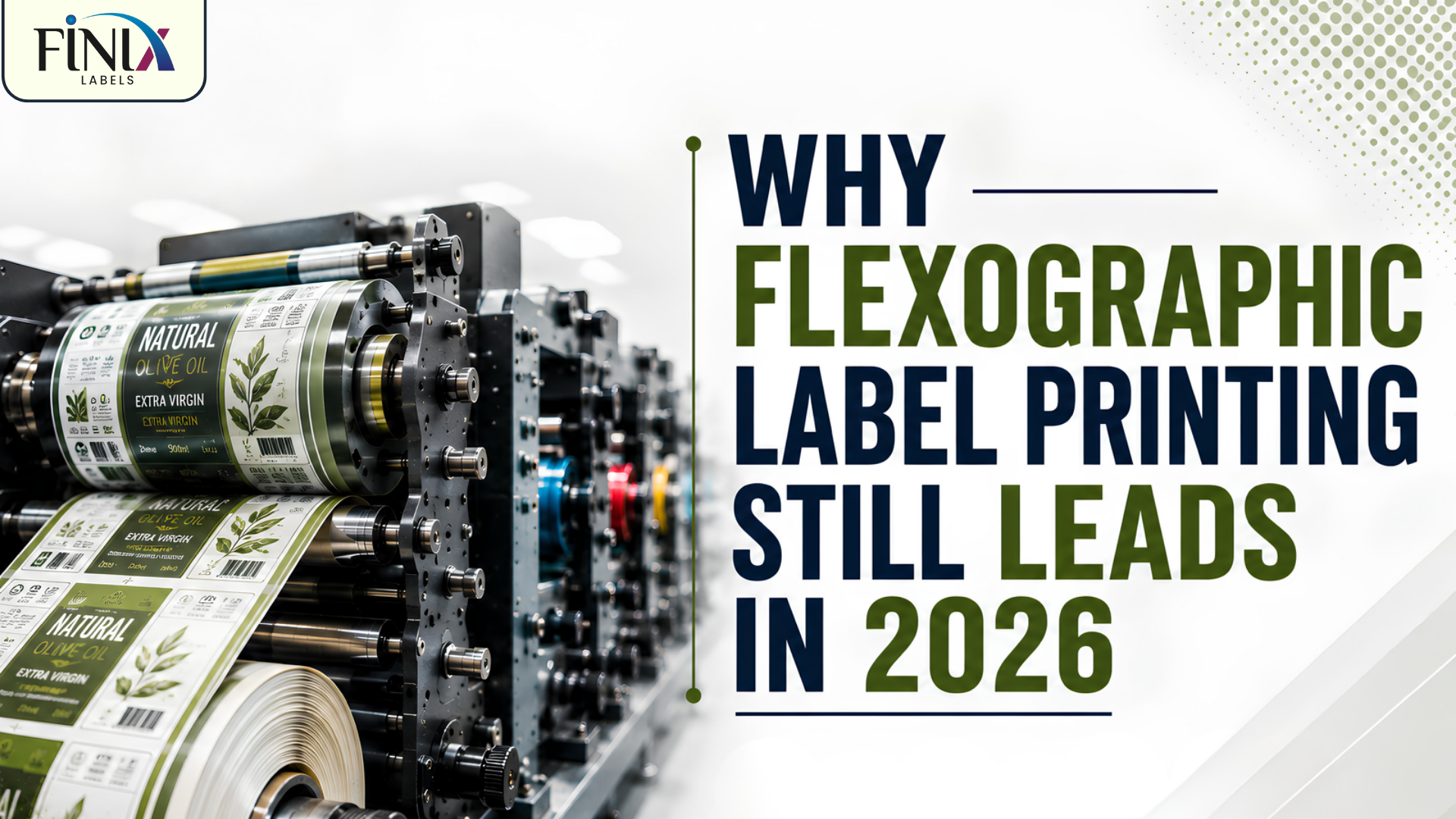
Why Flexographic Label Printing Still Leads in 2026
Label printing requirements and technology have changed over the years, with different printing methods now available for different requirements. Even with these changes, flexographic label printing continues to be a popular choice for companies that need labels in larger quantities with consistent print quality.
The right printing method depends on quantity, label material, packaging, design, and how the labels will be applied.
What Is Flexographic Label Printing?
Flexographic printing, also known as flexo printing, uses flexible printing plates to transfer ink onto label material. The material moves continuously through the printing press in rolls, allowing labels to be produced efficiently in larger quantities.
Flexo printing can be used on different paper and film materials, making it suitable for many types of product labels.
Suitable for Larger Print Quantities
Flexographic printing is commonly used when the same label design is required in larger quantities.
Once the press is set up, labels can be printed continuously with the same colours, text, and design. This makes flexographic labels useful for manufacturers that regularly need labels for ongoing production.
It is also a practical option for repeat orders where consistent results are needed across different batches.
Consistent Print Quality
Differences in colour, text, or design can be easily noticed when products are displayed together. Keeping the label appearance consistent is important for brand presentation.
With proper artwork, plates, inks, and press settings, flexographic printing can produce clear text, solid colours, logos, and product information.
This makes it suitable for food products, beverages, cosmetics, personal care products, pharmaceuticals, and other packaged goods.
Works with Different Label Materials
Not every product uses the same label material. The right choice depends on the packaging surface and where the product will be stored or used.
Flexographic label printing can be used with different paper and film-based materials. Factors such as moisture, oil, refrigeration, heat, transportation, and regular handling should be considered when selecting the material.
The adhesive should also suit the packaging surface so the label stays properly attached.
Works Well with Automatic Labelling
Many manufacturing units use automatic labelling machines on their packing lines. Labels used with these machines need the correct size, spacing, roll direction, and die-cutting.
Well-produced roll labels can move smoothly through the machine and support accurate placement during packing. Checking these details before production can also help avoid application problems and label waste.
Flexo or Digital Printing?
Both flexographic and digital printing have their own applications:
Digital printing can be useful for smaller quantities, samples, frequent design changes, and customised jobs. Flexographic printing is often considered when larger quantities of the same design are required.
The right choice depends on the quantity, artwork, material, application, and production requirements.
Final Thoughts
Flexographic label printing offers consistent print quality, works with different label materials, supports larger production quantities, and is suitable for roll labels used with automatic labelling machines.
Choosing the right printing method depends on the product, packaging, quantity, and how the label will be used.
At Finix Labels, we manufacture flexographic labels, product labels, barcode labels, bottle labels, self-adhesive labels, and customised labels for different industries and applications.
For enquiries and barcode labels,
Mail us at: info@finixlabels.com
Call: +91 98464 31143