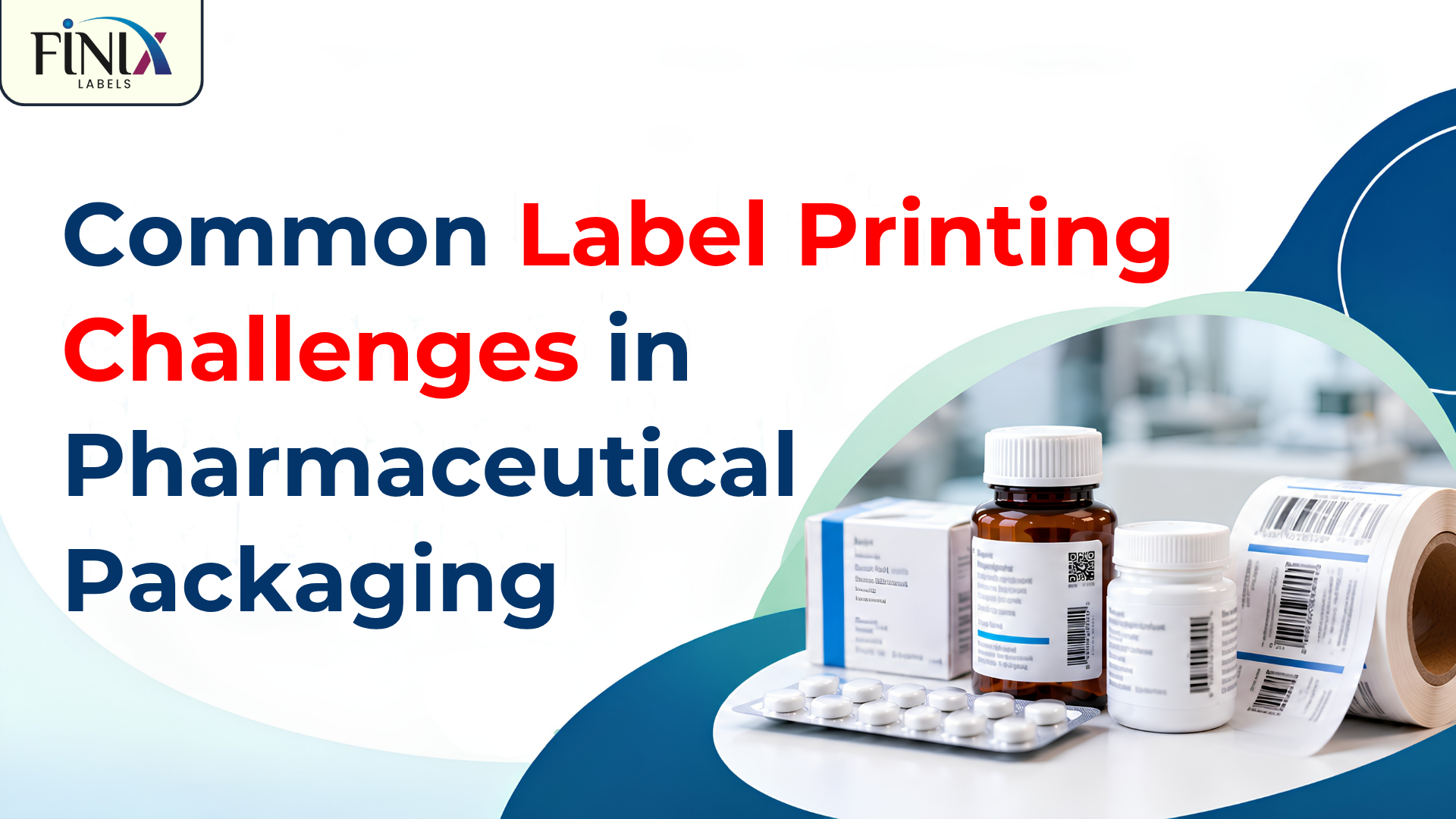
Common Label Printing Challenges in Pharmaceutical Packaging
Labels are an important part of pharmaceutical packaging. They not only provide details about medicines, including product names, batch numbers, expiry dates, and storage instructions, but also help keep the product safe.
Printing labels for medicine bottles, tablet containers, and cartons can sometimes be challenging. Small printing errors, unsuitable materials, or incorrect label sizes can affect the final packaging and lead to rejection and dissatisfaction.
Here are some common problems manufacturers face during pharmaceutical label printing.
Difficulty in Printing Small Text
Medicine labels often contain a lot of information in a small space. Printing all these details clearly can be difficult, especially on small bottles and containers.If the text is too small or the print quality is poor, important information may become difficult to read.
Choosing a suitable font size, maintaining good print quality, and checking samples before production can help avoid this problem.
Errors in Batch Numbers and Expiry Dates
Batch numbers, manufacturing dates, and expiry dates are important details on pharmaceutical labels.Mistakes in these details can create problems during product identification and distribution.
Sometimes, the information may be correct, but poor printing makes it difficult to read. Checking the printed details during production helps reduce such errors.
Labels Not Sticking Properly
Medicine bottles and containers are made from different materials, including plastic and glass. Some have curved surfaces, while others have flat surfaces. Using the wrong adhesive or label material can cause labels to lift or peel from the container.
The label material and adhesive should be selected according to the packaging surface. Testing a sample on the actual container is useful before placing a bulk order.
Barcode Printing Problems
Barcodes are commonly used on pharmaceutical packaging for product identification and stock management. If a barcode is printed too lightly, becomes blurred, or has poor contrast, scanners may not read it properly.
Using the correct printing settings, suitable label materials, and good-quality ribbons can help maintain clear barcode printing.
Labels Getting Damaged During Storage
Some medicines need special storage conditions. Moisture, temperature changes, and regular handling may affect the appearance of the label.
For example, a paper label may not be suitable for packaging that is frequently exposed to moisture. Choosing between paper labels, BOPP labels, and other materials depends on the product and its storage conditions.
Incorrect Label Size and Roll Direction
Many pharmaceutical manufacturers use automatic labelling machines. Labels must be supplied in the correct size and roll format to work properly with these machines.
Incorrect label spacing, roll direction, or core size can interrupt the labelling process and lead to material wastage. Confirming these details before printing helps avoid unnecessary delays.
Why Finix Labels?
Pharmaceutical labels printing needs to be handled with utmost care and sensitivity. Even small printing errors can affect packaging quality. The right printing technology and proper quality checks help produce labels that meet your packaging requirements.
At Finix Labels, we manufacture BOPP labels, paper labels, clear labels, self-adhesive labels, barcode labels, and customised product labels based on your specific requirements.
For enquiries:
📧 info@finixlabels.com
📞 +91 98464 31143