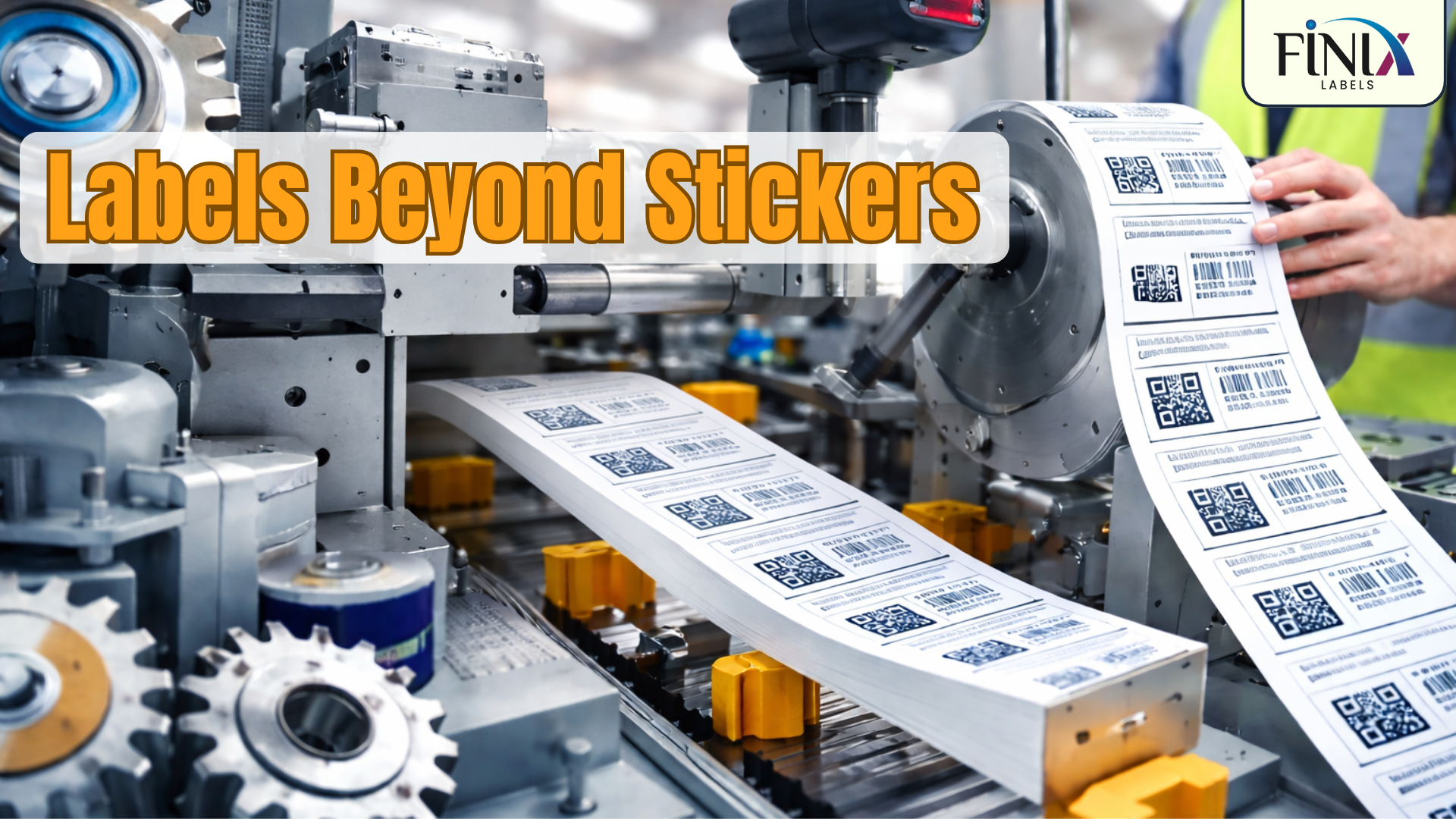
Why Labels Should Be Treated as a Production Tool, Not a Sticker ?
In many manufacturing units, labels are seen as the final touch. Once the product is ready, a label is applied and the job is considered complete. This mindset treats labels as a basic sticker used only for display or information. In reality, labels play a much deeper role inside the production system. They influence accuracy, speed, traceability, and even customer satisfaction. When labels are treated as a production tool rather than an afterthought, overall operations become smoother and more reliable.
Labels are actively involved throughout the production and supply process. From identifying batches and dates to guiding packing and dispatch, labels help teams work with clarity. Clear text, readable barcodes, and consistent layout reduce mistakes during packing and storage. When labels are unclear or inconsistent, staff spend extra time verifying details, which slows down operations.
In automated and semi-automated environments, labels must work seamlessly with machines. Improper release, uneven cutting, or weak adhesive can cause machine stoppages and wastage. These issues directly affect productivity. Treating labels as a production input ensures that material selection, adhesive strength, and roll finish are suited for machine application.
Label-related errors are also a common cause of product rejection. Misprints, peeling labels, or incorrect information result in rework or disposal. These losses are avoidable when labels are tested and approved under real operating conditions. Consistency between sample approval and repeat production is critical.
Labels also support traceability and compliance. Manufacturing details, lot numbers, and regulatory information help businesses track products across the supply chain. During audits or recalls, clear and durable labels reduce risk and confusion. A label that fades or tears compromises traceability and exposes the business to compliance issues.
In warehouses and during dispatch, labels act as identifiers. Staff depend on them to sort, scan, and load products correctly. Good label quality improves speed and accuracy while reducing dependency on manual checking.
Conclusion
When labels are treated only as stickers, problems appear after damage is done. When treated as a production tool, labels are planned, tested, and controlled like any other critical input. This approach reduces downtime, minimises errors, and supports consistent output.
At Finix Labels, labels are developed with a clear understanding of how they function inside real production environments. Every stage, from material selection to finishing, is focused on performance, consistency, and reliability. Because strong production systems are built not only on machines and manpower, but also on labels that work silently and effectively at every step.
For enquiries and barcode labels, mail us at info@finixlabels.com
Call: +91 98464 31143