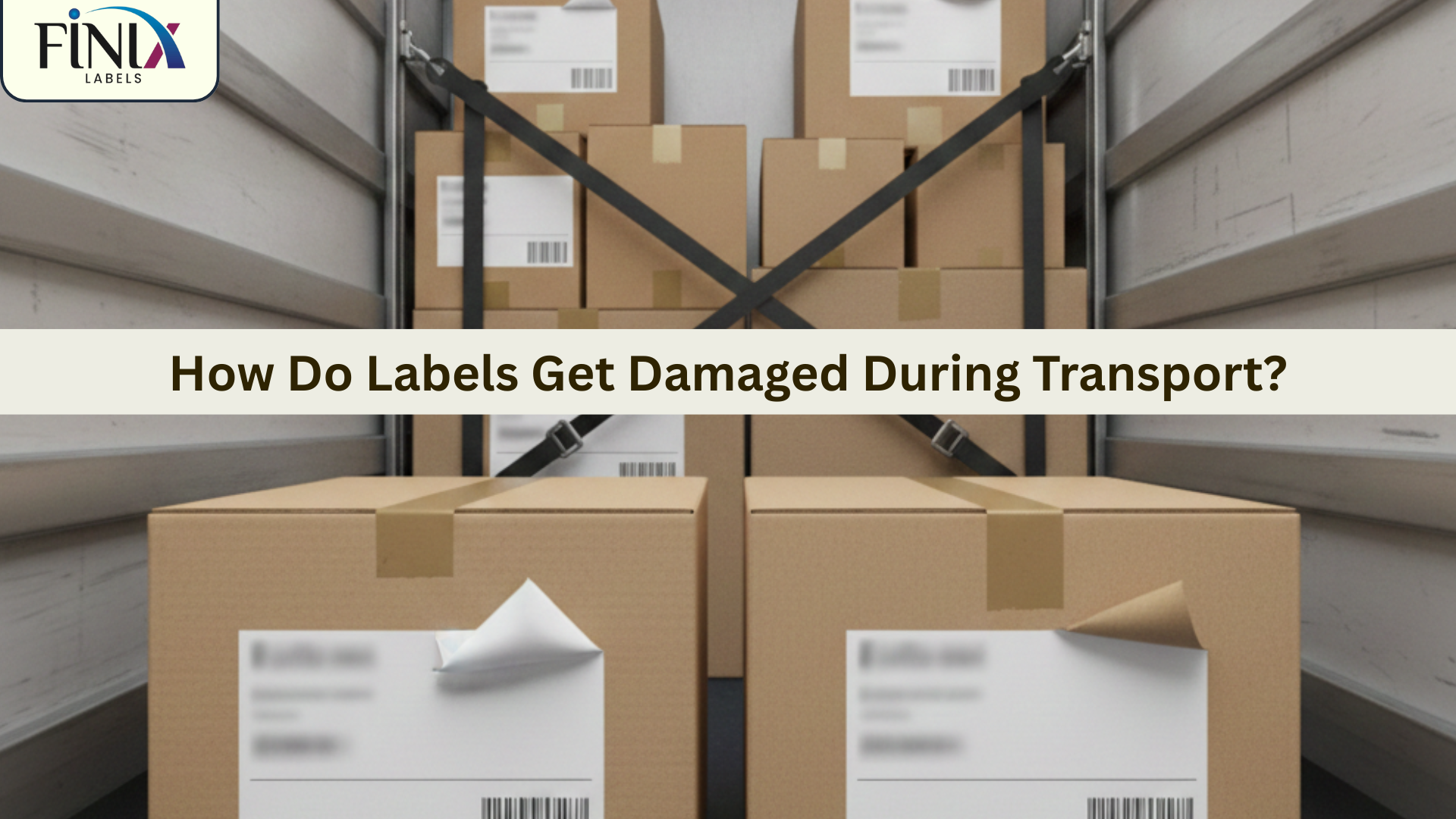
Why Labels Fail During Transport and How to Prevent It ?
Many businesses are surprised when labels that looked perfect at the factory fail by the time the product reaches the customer. The printing was clear, the adhesive felt strong, and everything looked fine during packing. Yet during transport, labels peel off, fade, tear, or become unreadable.
This is not a rare issue. Transport is one of the toughest stages for any label.
Transport Conditions Are Harsh
Once products leave the factory, they face conditions that are very different from controlled indoor environments. Boxes are stacked, moved, loaded, unloaded, and stored multiple times. During this journey, labels face friction, pressure, moisture, dust, and temperature changes.
Trucks may travel through heat and rain. Goods may be stacked tightly or rubbed against other cartons. If labels are not designed for these conditions, failure becomes unavoidable.
Common Reasons Labels Fail in Transit
One major reason is incorrect adhesive selection. Some adhesives work well on flat, clean surfaces but fail on curved or textured packaging. During movement, edges start lifting and labels slowly peel off.
Another issue is material choice. Paper labels may tear or absorb moisture during long journeys. Ink may fade if it is not suitable for exposure to light or humidity.
Label placement also matters. Labels placed near corners or folds are more likely to get damaged when cartons are handled roughly.
How Label Failure Affects Business
When labels fail during transport, the impact goes beyond appearance. Missing or damaged labels create confusion at warehouses and customer locations. Products may be rejected, delayed, or questioned.
In some cases, teams need to relabel products manually, increasing labour and time costs. Customers may lose confidence, especially if important details like batch numbers or product information are unclear.
These problems quietly increase operational stress and affect brand reliability.
Preventing Label Failure Starts Before Printing
The first step is understanding how the product will travel. Will it face moisture? Will cartons be stacked tightly? Will the journey be short or long?
Based on this, the right label material and adhesive should be selected. Durable materials and strong adhesives designed for movement reduce the risk of peeling and tearing.
Testing labels on actual packaging before final production is also important. A small trial can reveal issues that are not visible on the first day.
Placement and Packing Matter
Correct label placement helps labels survive handling. Labels should be placed on flat, protected surfaces where friction is minimal. Proper packing also reduces unnecessary rubbing and pressure on labels.
Good coordination between printing, packing, and dispatch teams ensures that labels are treated as part of the product, not an afterthought.
Final Thought
Label failure during transport is not a printing problem alone. It is a planning problem. When labels are chosen and applied with real transport conditions in mind, they stay intact until the product reaches the customer.
At Finix Labels, we help businesses think beyond printing, so labels perform reliably from dispatch to delivery.
For enquiries and barcode labels, mail us at info@finixlabels.com
Call: +91 98464 31143