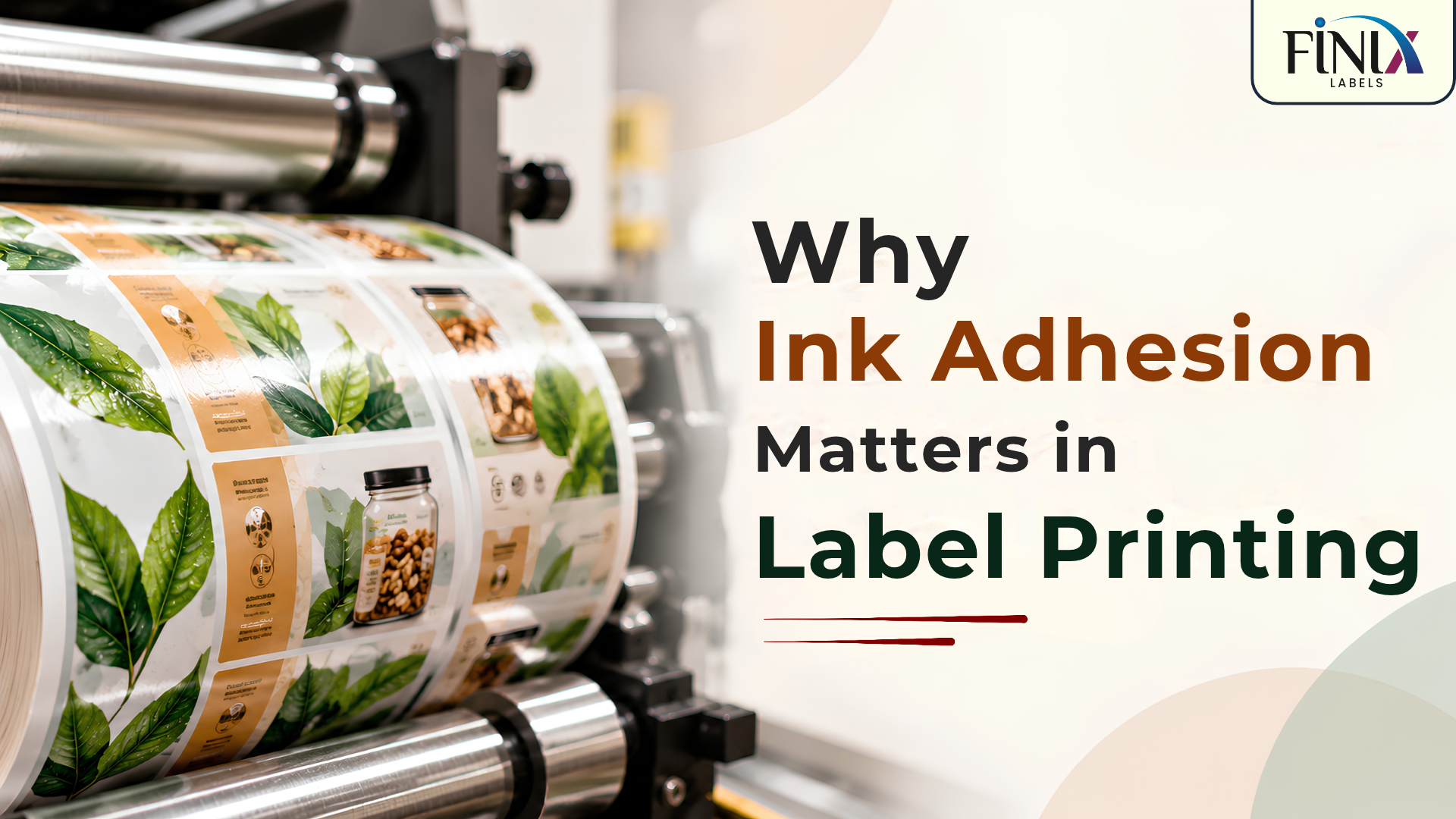
Why Ink Adhesion Matters in Label Printing
A product label should remain clear and attractive from the time it is printed until the product reaches the customer. However, sometimes the printed ink may come off during handling, packing, or transportation. This can affect the label’s appearance and make product information difficult to read.
One reason for this is poor ink adhesion. Ink adhesion in label printing refers to how well the ink sticks to the label material. Good ink adhesion helps maintain print quality and prevents damage during normal use.
Different Materials Need Different Inks
Labels are made from different materials, including paper, BOPP, and other plastic films. Each material reacts differently to printing ink.
Paper labels generally absorb ink, while BOPP labels have a smooth surface that does not absorb ink in the same way. An ink that works well on paper may not give the same result on plastic film.
Choosing an ink that suits the label material is necessary for getting a good printing result.
Surface Condition Affects Printing
The condition of the label surface can affect how well the ink sticks.
Dust, oil, or other unwanted substances may prevent proper ink adhesion. Even when good-quality ink is used, a contaminated surface can affect the final print.
Keeping label materials clean and handling them properly before printing can help avoid these problems.
Proper Ink Drying Is Necessary
After printing, the ink must dry or cure properly before the labels move to the next stage.
If the ink has not dried or cured sufficiently, it may transfer to another part of the label roll or get damaged during handling.
Printing speed, ink type, and drying conditions should be checked to ensure the ink stays on the label surface.
Why Ink Adhesion Matters During Packaging
Printed labels pass through several processes before reaching customers. These include cutting, winding, labelling, packing, and transportation.
During these stages, labels may come into contact with machines, containers, or packaging materials.
Poor ink adhesion can cause printed text or designs to wear off. This may result in rejected labels and additional printing costs.
Checking Ink Adhesion Before Bulk Printing
A label may look good immediately after printing, but its durability should also be checked.
Simple tests, such as rubbing the printed surface or carrying out a suitable tape test, can help identify adhesion problems.
Checking samples before bulk production allows manufacturers to make necessary changes to the ink, material, or printing settings.
Choosing Labels Based on Product Requirements
Not all products need the same type of label. A label used on a cardboard box may have different requirements from one used on a plastic bottle.
The packaging material, handling conditions, and expected use should be considered when selecting label materials and printing methods.
Why Finix Labels?
Good label printing quality depends on the right combination of label material, ink, and printing process. Proper ink adhesion helps maintain the appearance and readability of product labels.
At Finix Labels, we manufacture BOPP labels, paper labels, clear labels, self-adhesive labels, barcode labels, and customised product labels according to customer requirements.
For enquiries:
📧 info@finixlabels.com
📞 +91 98464 31143