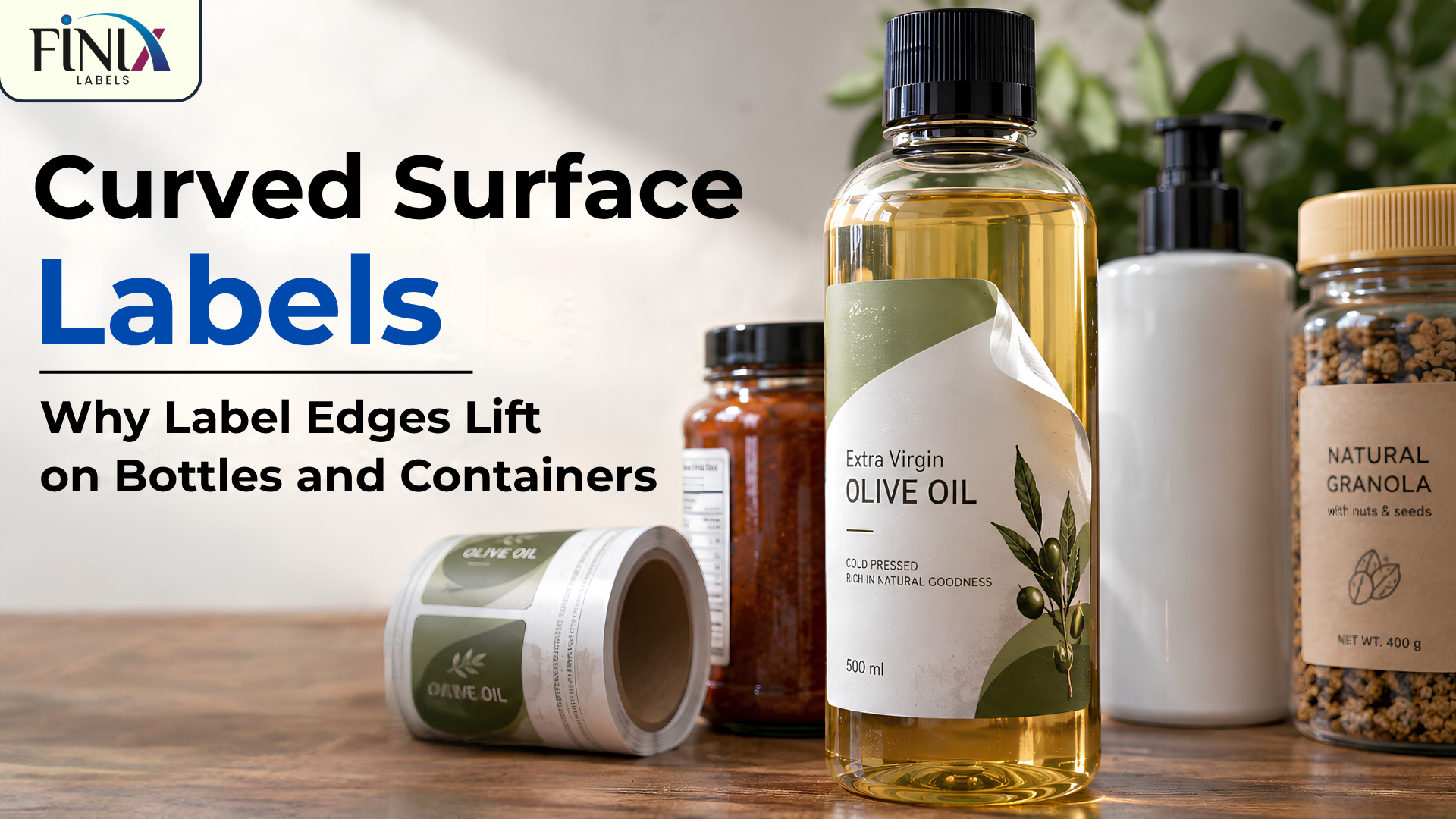
Curved Surface Labels: Why Label Edges Lift on Bottles and Containers
Have you ever noticed the edges of a label starting to lift from a bottle after some time? The label may look perfect when it is first applied, but later the corners or edges can slowly come away from the surface.
This is a common issue with round bottles, jars, tubes, and other curved packaging. For curved surface labels, the size, material, adhesive, and application method all need to work well together.
Why Curved Surfaces Can Cause Problems
Labels are easier to apply on flat surfaces. On a round or curved bottle, the label has to bend and stay in that shape.
When the curve is tight, the label may try to return to its original flat form. This creates pressure around the edges and can make them lift over time. Smaller bottles can have this problem more often because their curves are tighter.
Choose the Correct Label Size
The size of the label should match the available area on the container.
A label that is too large for a small curved bottle may not sit properly. It can create extra tension, especially around the edges. Measuring the container before finalising the design can help avoid this issue.
For labels for curved bottles, the correct size can make a big difference in how well the label stays attached.
Use a Suitable Label Material
Different label materials have different levels of flexibility. Some can easily follow the shape of a curved container, while others are more suitable for flat surfaces.
The material should be selected based on the packaging, product use, and storage conditions. BOPP labels, for example, are commonly used on different types of bottles and containers because they can handle moisture and regular use.
The right material can also reduce wrinkles and lifting around the edges.
Check the Label Adhesive
The label adhesive should be suitable for the surface where it will be applied. Glass, plastic, and metal do not always need the same type of adhesive.
The surface should also be clean and dry before labelling. Dust, oil, or moisture on the bottle can reduce the adhesive contact and cause the label to lift.
The label material and adhesive should therefore be selected together.
Apply the Label Properly
Even a good self-adhesive label can have problems if it is not applied correctly.
The label should be placed evenly and pressed properly across the surface. Air bubbles, wrinkles, or uneven pressure can prevent some parts of the adhesive from making full contact.
For automatic labelling, correct machine settings, spacing, and label positioning are also important.
Test Before Large-Quantity Printing
Before ordering a large quantity, test a sample label on the actual bottle or container.
Leave it for some time and check whether the edges remain properly attached. If possible, test it under the same storage and handling conditions as the final product.
A simple test can help identify problems before full production starts.
Final Thoughts
Label edges can lift because of the container shape, label size, material, adhesive, or application method. Checking these factors before printing can help curved surface labels stay properly attached and maintain a neat appearance.
At Finix Labels, we manufacture curved surface labels, bottle labels, BOPP labels, self-adhesive labels, barcode labels, and customised product labels for different packaging requirements.
For enquiries and barcode labels:
Mail: info@finixlabels.com
Call: +91 98464 31143